
Snopes
Snopes, IncNews & Magazines
4.670.00 Reviews
- Version
- 3.10.0
- Installs
- 50.00K
- Age Rating
- Everyone 10+
Screenshots
Our Review of Snopes
 Analysis by Appyee
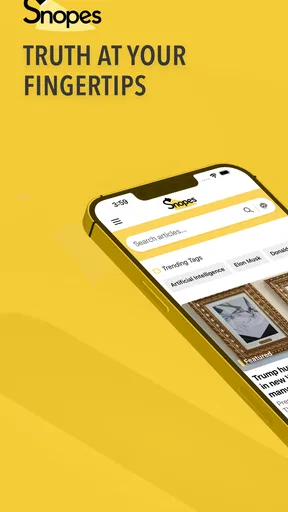
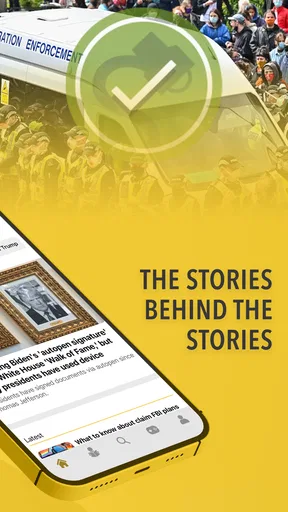
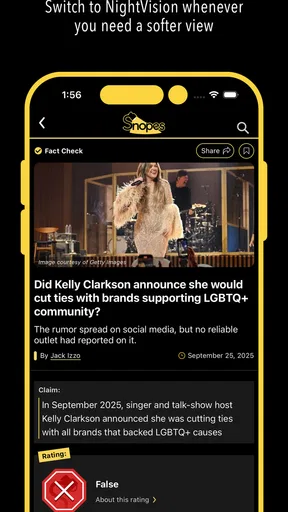
I use Snopes as a quick reality check when a dramatic claim starts moving through my feeds, and my overall impression is clear: it is more useful as a careful verification companion than as a general news reader. The app, developed by Snopes, Inc, focuses on fact checking inside the News & Magazines category, giving me a place to pause before I forward a surprising story, image, rumor, or headline.
That distinction matters. This is not an app I open expecting a constant stream of breaking news, personalized entertainment, or a broad newspaper-style front page. I open it when I want context and a reasoned assessment. That narrower purpose is also its main strength. Instead of asking me to trust a viral post because it looks polished, it encourages a slower habit: identify the claim, look for the relevant check, read the explanation, and decide what the evidence actually supports.
The app is free to install and carries an Everyone 10+ age rating. Its current version is 3.7, and it runs on Android 7.0 or later. The listing shows a 4.4 average from around 193 ratings, with more than 10 thousand installs, so it has a modest footprint compared with the biggest news applications. In my view, that smaller audience does not define its value, but it does suggest that Snopes works best for people who deliberately want fact-checking rather than another mass-market news feed.
How Snopes fits into everyday fact checking
The most convincing part of the experience is the way it changes my reading routine. When I encounter a claim that sounds too perfect, too frightening, or too convenient, I do not have to settle the entire argument immediately. I can use the app to look for a relevant explanation and then separate the claim itself from the surrounding commentary. That is a small but important improvement over reacting to a screenshot or repeating something because several people posted it.
I find this especially useful with stories that have a familiar shape: a supposed warning, an astonishing historical anecdote, a suspicious quote, a health-related claim, or a post that presents an old event as if it happened today. The practical benefit is not simply receiving a label. The useful part is seeing how the claim is framed and where the confusion may have started. That gives me better language when I explain the result to someone else.
A realistic example is a family group chat sharing a message about a new rule, a public figure, or an alarming incident. My first instinct used to be searching the exact wording in a general search engine. That often produced a mixture of copied posts, opinion pieces, and unrelated pages. With Snopes, I can begin with the claim as presented, look for a matching check, and read before responding. If the wording does not match perfectly, I treat the result as background rather than proof, which is a healthier workflow than forcing an approximate match to settle the matter.
That workflow reveals one of the app’s less obvious strengths: it can help me investigate the wording of a rumor, not just its conclusion. Two posts may appear to make the same statement while changing a date, location, image, or key condition. Those small changes can completely alter the truth of a claim. I therefore pay attention to the explanation and scope of a check instead of copying only its final rating into a conversation.
Another useful habit is opening the app after I have formed an opinion, not only before. If I already dislike or support the claim, I am more likely to skim for confirmation. Reading the full explanation forces me to notice qualifications and gaps. In that sense, Snopes is most valuable when I use it as a brake on my own certainty. It does not replace judgment, but it gives judgment something more substantial to work with.
What makes the evidence useful
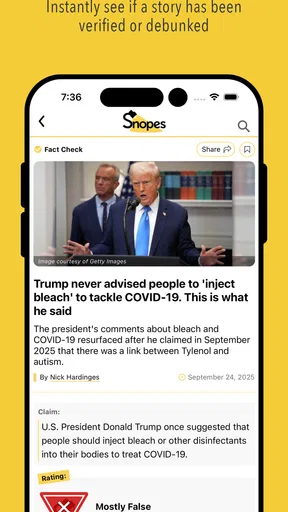
The app’s strongest evidence comes from its explanatory role. A bare true-or-false answer would be easy to consume and easy to misuse. What I want is the reasoning around the verdict: what was actually claimed, what part can be supported, and what part may be exaggerated or missing. That context helps me avoid a common mistake in online discussions, where a fact-check is treated as a universal answer to every version of a rumor.
I also appreciate the value of returning to a check later. Online claims often resurface with altered wording, a new image, or a different emotional angle. A previous explanation can give me a starting point for recognizing the recycled structure. This is more efficient than treating every repost as a completely new event, although I still check whether the current version changes the important details.
For students, family researchers, and people who regularly moderate online communities, that background can be more useful than a fast headline feed. A person preparing a discussion can use a check to identify which part of a popular story deserves closer examination. Someone answering relatives can avoid an overconfident reply and point to the explanation instead. I would not use the app as the sole source for a serious academic or professional decision, but it is a practical first layer of verification.
There is also a social advantage. Fact checking can easily become confrontational when it sounds like one person is trying to win an argument. I find that sharing a clear explanation is less aggressive than simply saying, “That is false.” It leaves room to discuss the claim itself and reduces the temptation to turn every correction into a personal dispute. The app cannot solve the social side of misinformation, but it supports a more measured way to approach it.
One tip I would give new users is to search for the central claim rather than every decorative detail. Viral posts often contain emotional language, hashtags, and personal commentary that are not part of the checkable statement. Removing those extras makes it easier to identify what needs verification. After finding a relevant result, I compare the wording, timing, and subject before relying on it. This two-step habit is more dependable than accepting the first similar-looking result.
Where the experience falls short
The focused nature of Snopes can also feel limiting. If I want a broad morning briefing, local reporting, live updates, or several viewpoints on a developing story, a conventional news application is usually a better fit. Snopes is built around checking claims, so it does not replace the breadth and immediacy I expect from a full news service. Installing it alongside a news reader makes more sense to me than trying to use it as the only information app on my phone.
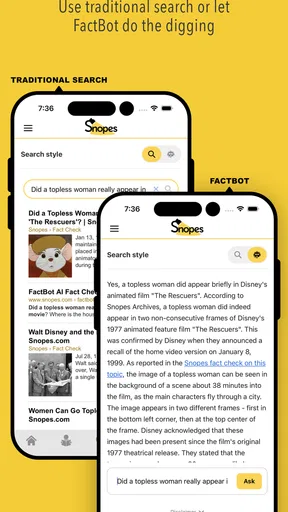
There is a second limitation in the search process itself: not every claim is easy to match. People paraphrase, translate, shorten, and combine rumors. A search may return something related without addressing the exact version in front of me. That is not necessarily a failure of the article; it is a reminder that fact checking depends on precise wording and context. I have to resist treating a nearby result as a perfect answer.
This creates a meaningful trade-off. The app helps most when I am willing to read carefully, but that is also the point at which it becomes less convenient than a quick social-media reaction. Someone looking for instant certainty may find the process slower than expected. I consider that slowness healthy, yet it can still be friction for users who want a single tap to settle a complicated issue.
Another weakness is psychological rather than technical. A fact-checking app can become a confirmation tool if I only search for claims made by people I disagree with. The same source can be used responsibly or selectively. I get more value when I apply the same standard to claims that support my own views. Snopes can provide evidence and context, but it cannot force me to read fairly or acknowledge an inconvenient conclusion.
Users should also understand the difference between a checked claim and a complete investigation. A result may address the central rumor while leaving broader questions open. For important matters involving money, health, safety, law, or personal decisions, I would use the app as an initial guide and then consult the relevant primary source or qualified professional. That is not a criticism unique to this app; it is the sensible limit of using any fact-checking service as a single authority.
The presence of optional purchases is worth keeping in mind as well. The app is free, while listed in-app purchases range from $4.99 to $199.99 per item. I would review the purchase screen carefully before confirming anything and decide whether the free experience already meets my needs. The wide range means I would not assume that every part of the experience is covered by the initial download.
Who will get the most from it
I recommend Snopes to people who regularly encounter questionable posts and want a dedicated place to investigate them. It is a particularly good match for users who share information with family, manage online groups, teach media literacy, or simply dislike passing along a rumor by accident. The app rewards curiosity and patience more than passive scrolling.
It also suits readers who want to improve their verification habits without building a complicated research system. My preferred routine is simple: copy the core wording of a claim, search it in the app, read the explanation rather than only the verdict, and compare the checked version with the post I actually saw. If the details differ, I treat the result as a clue and continue checking elsewhere.
For parents and older teenagers, the Everyone 10+ rating makes the app approachable as a media-literacy tool, but I would still encourage discussion around sensitive subjects and emotionally charged stories. The important lesson is not memorizing labels. It is learning to ask what exactly is being claimed, what evidence supports it, and whether the post has removed important context.
I would skip it if my main goal is a personalized stream of headlines, sports updates, local reporting, or rapid live coverage. I would also skip relying on it alone for a high-stakes decision. A general news app is better for discovering what is happening, while primary documents, specialist sources, and professional advice are better for decisions that carry serious consequences. Snopes occupies the middle ground: more focused than a news feed, but not a replacement for every kind of research.
Compared with searching the open web, the app offers a more purposeful starting point. A normal search can be faster for obscure details, but it also mixes reliable material with repetition and speculation. Compared with social platforms, Snopes is far less driven by viral momentum. Compared with a newspaper app, it provides less breadth but more attention to the structure of a claim. That trade-off explains both its usefulness and its narrow audience.
My final view after using it
My verdict is positive, with a clear qualification: Snopes is best understood as a fact-checking tool, not a complete news destination. Its strongest contribution is encouraging me to slow down, isolate the actual claim, and read the reasoning before sharing a conclusion. That is a valuable role in a media environment where speed often rewards the most dramatic version of a story.
I like that the app can turn a vague feeling of suspicion into a repeatable process. I can investigate a message, compare its wording with an existing check, notice missing context, and explain my response more responsibly. The experience is most rewarding when I am prepared to read beyond a simple label. It is less satisfying when I want instant confirmation or a broad overview of the day.
The free entry point makes it easy to try, and the developer’s focus gives the app a clear identity. At the same time, the optional purchase range means I would pay attention during setup and use. I would also keep another source nearby for breaking news and important decisions rather than asking one app to do everything.
My recommendation is straightforward: use Snopes as a pause button for suspicious claims. It is a strong companion for careful readers, educators, group-chat fact checkers, and anyone trying to build better information habits. It is not the right choice for someone seeking a full news feed or effortless certainty. If you accept its focused purpose and take the time to read the context, it can make everyday online conversations more accurate and considerably less reactive.
Privacy and Permissions
See what permissions an app requests and how it handles your data.
- Photos/Media/Files
- read the contents of your USB storage, modify or delete the contents of your USB storage
- Storage
- read the contents of your USB storage, modify or delete the contents of your USB storage
- Other
- view network connections, full network access, run at startup, draw over other apps, control vibration, prevent device from sleeping, Google Play license check
Verdict
Strengths of Snopes
- Helps verify viral claims, rumors, and misleading headlines quickly.
- Articles usually include sources and explain how a claim was rated.
- Searchable database makes checking recurring hoaxes convenient.
- Covers politics, science, entertainment, and everyday misinformation.
- Useful for media literacy and teaching critical evaluation of claims.
Limitations of Snopes
- Some investigations may feel lengthy when you only need a quick verdict.
- Coverage can be influenced by the availability of reliable evidence.
- Certain articles may become outdated as new information emerges.
- Frequent readers may encounter repeated coverage of popular internet rumors.
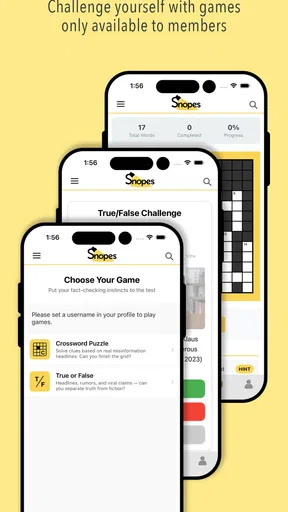
- Some content and features may require an account or subscription.
Similar Picks in This Category
View All
Google News - Daily Headlines
Google LLC4.0

X
X Corp.4.8

Flipboard:Your Social Magazine
Flipboard3.4

Opera News: breaking & local
Opera4.5

Hindi News by Dainik Bhaskar
Dainik Bhaskar Group4.0

Way2News Daily News App
Way2News ( Formerly Way2SMS )4.6
Frequently Asked Questions
What is Snopes, and what can I use it for?
Snopes is a fact-checking platform that investigates rumors, viral claims, hoaxes, misleading stories, urban legends, and questionable online content. After installing the app or accessing the service, users can browse researched articles, search for a specific claim, and compare the claim with available evidence. It is especially useful when you encounter suspicious posts, sensational headlines, or widely shared information on social media.
Is Snopes reliable for checking whether information is true?
Snopes is widely recognized as an established fact-checking source, and its articles generally explain the claim, research process, evidence, and final rating. However, no fact-checking service should be treated as infallible. Some subjects may involve incomplete information, changing circumstances, or reasonable disagreement. It is best to read the full explanation, check the publication date, and consult primary sources when a claim is particularly important.
Does Snopes cover only political misinformation?
No. Although Snopes frequently investigates political claims because they attract significant public attention, its coverage is much broader. You can find articles about health rumors, science, technology, entertainment, history, crime stories, advertisements, celebrity claims, scams, social media posts, and everyday urban legends. The available topics may vary over time, depending on current events and the claims receiving widespread attention.
Does the Snopes app require payment or an account?
Access requirements can depend on the version of Snopes available in your region and whether you use the mobile application or website. Many articles may be available without creating an account, while certain features, advertising settings, subscriptions, or supporter options can change over time. Before downloading, review the current store listing and in-app information carefully to confirm pricing, account requirements, and any optional purchases.
Can I submit a rumor or suspicious claim to Snopes for investigation?
Snopes has historically accepted suggestions and tips from readers, allowing users to point the editorial team toward rumors or claims that deserve attention. Submission availability and the exact process may change between the app and website, so check the current contact or tip-submission section. Sending a claim does not guarantee publication, since the editorial team chooses topics based on evidence, relevance, and available resources.
